Gutenberg Fables · 4 min
The Ass and the Grasshopper
驢子與蚱蜢
An ass envies the grasshoppers’ song and copies their diet, only to learn that each creature has its own nature.
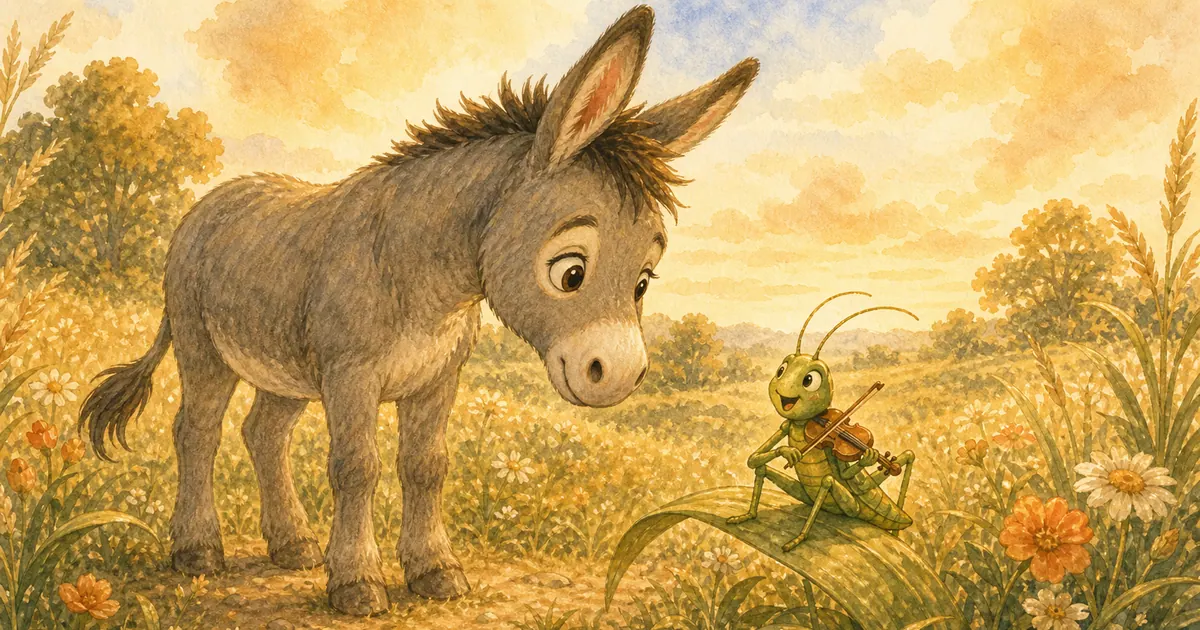
One bright morning the meadow was hung with drops of dew. An ass grazed there, swinging his ears as he cropped the grass. His own voice was harsh, and whenever he brayed it sounded to him like an old gate creaking. For that reason he took little pleasure in making any sound at all.
Then from the grass came a thin, sweet music. Several grasshoppers sat upon the blades and sang with voices as clear as tiny bells. The ass stopped chewing and listened. “If only I could sing like that,” he thought, “no one would laugh at my voice.”
He went to the grasshoppers and asked very earnestly, “What food do you eat that your voices may be so fine?” The grasshoppers answered, “We live on dew.” They spoke of their own way of life, but the ass heard the words as if they were a secret remedy.
From that day he refused grass and hay. At dawn he licked a few drops of dew from the leaves and waited for his voice to change. On the first day he was proud of his resolve. On the second day his stomach complained. On the third day his legs grew weak, and the sweet song of the grasshoppers seemed farther away than ever.
At last the ass sank down in the meadow and understood his folly. Dew might serve the grasshopper, but it could not nourish an ass. It is no shame to admire another creature’s gift; the shame lies in copying without thought and forgetting one’s own nature.
Read aloud
Uses the browser built-in speech engine.
Ready
Story takeaway
Admiration is useful only when joined with judgment; another’s way of life may not be fit for us.
Talk together
What should the ass have asked before changing what he ate?
Source information
Gutenberg · Project Gutenberg legacy SQLite export
Public-domain fables and short tales exported from the legacy SQLite database.
From the same shelf
Read next
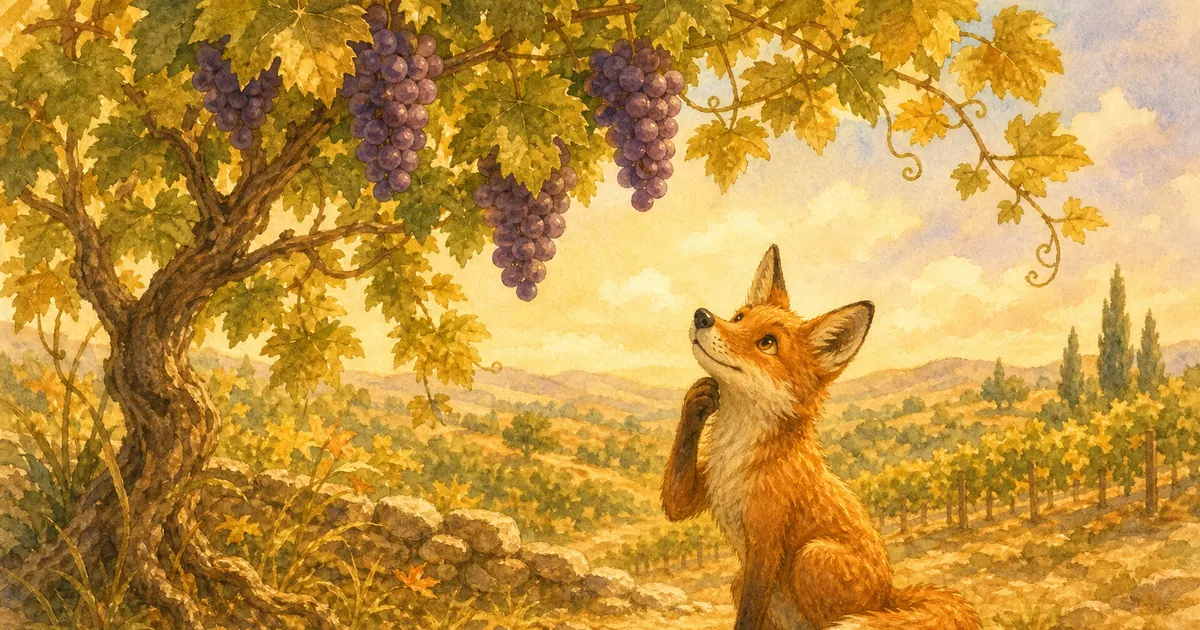
The Fox and the Grapes
狐狸與葡萄
A hungry fox fails to reach ripe grapes and calls them sour rather than admit his disappointment.
Read now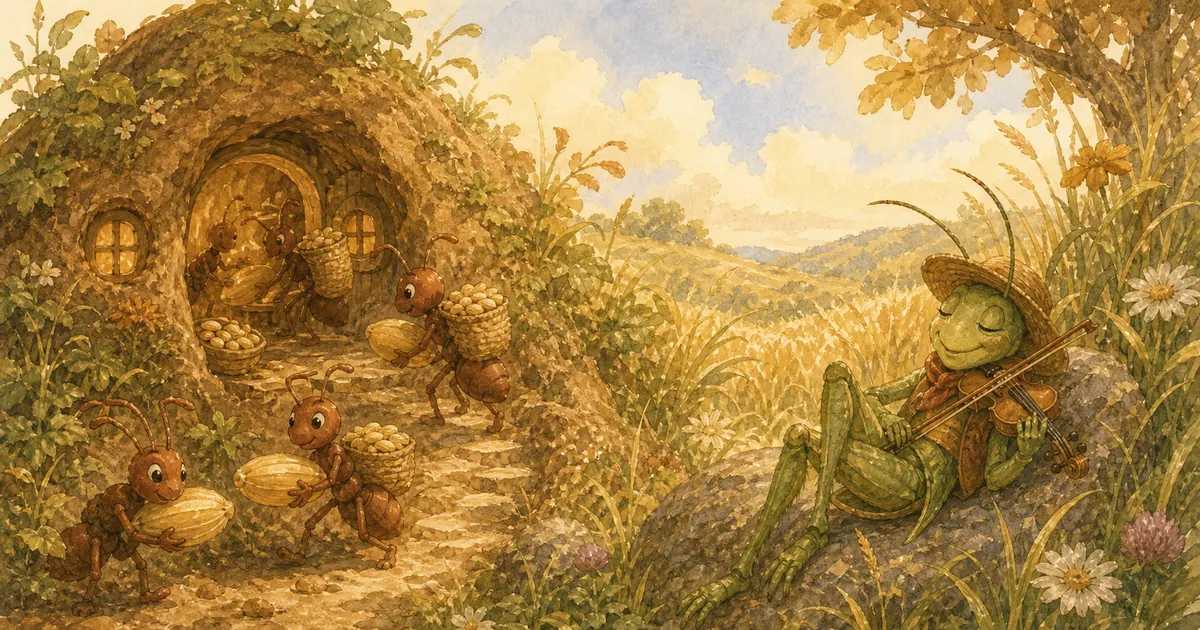
The Ant and the Grasshopper
螞蟻與蚱蜢
A grasshopper sings through summer while an ant stores food, then learns in winter that pleasure needs preparation.
Read now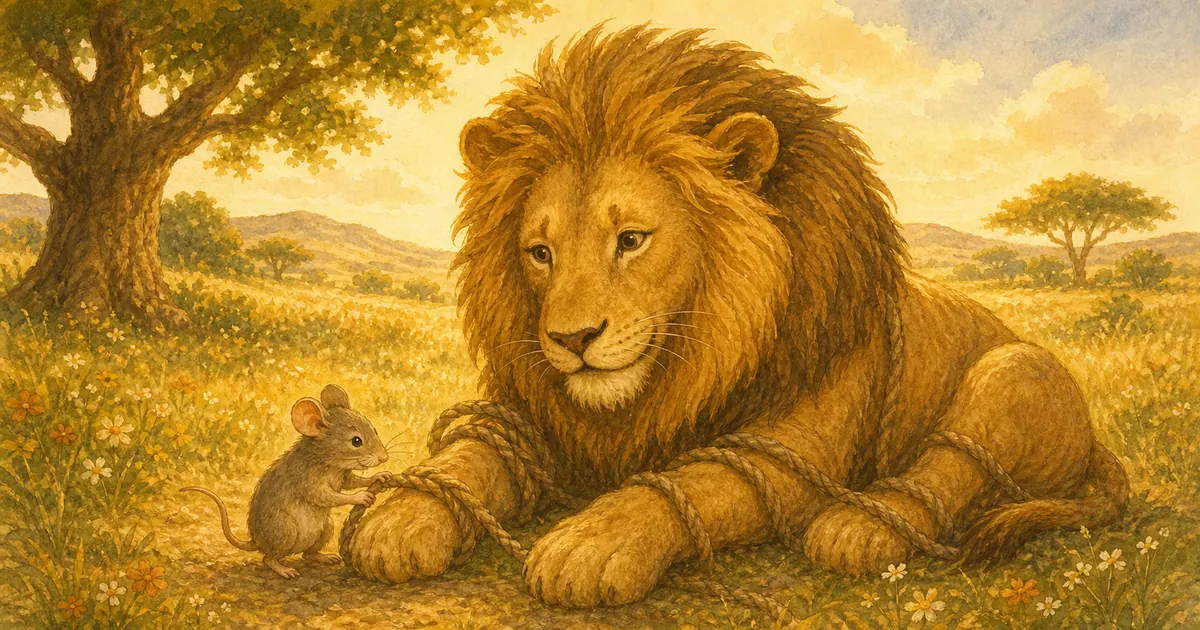
The Lion and the Mouse
獅子與老鼠
A mighty lion spares a little mouse and later learns that even the smallest friend may give great help.
Read now