Gutenberg Fables · 4 min
The Hare and the Tortoise
兔子與烏龜
A swift hare mocks a slow tortoise, but steady effort wins when pride falls asleep.
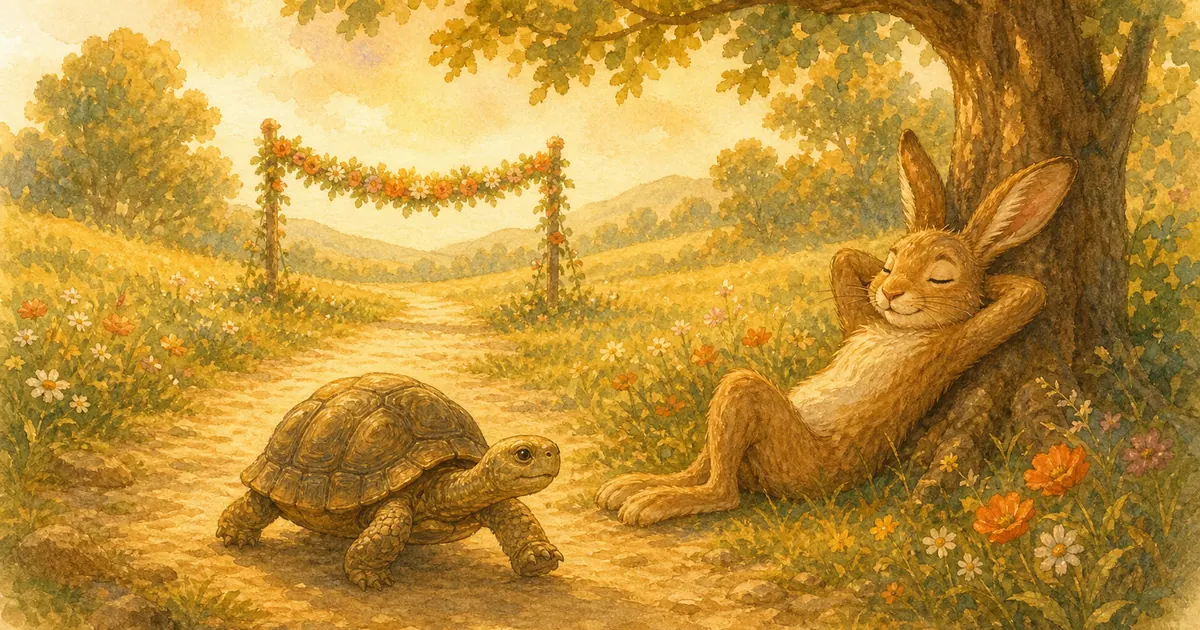
One day a hare saw a tortoise moving slowly across the grass. The tortoise’s feet were short, and each step seemed no quicker than the fall of a pebble. The hare sprang around him and laughed. “How long will it take you to reach anywhere at that pace?” he said. “A few bounds of mine would leave you far behind.”
The tortoise did not answer angrily. He lifted his head and said, “Though you may be swift as the wind, I will beat you in a race.” The hare thought this so impossible that he agreed at once. They asked the fox to mark the course and choose the goal, and the animals gathered to watch.
At the start, the hare flew forward like a brown shadow. The tortoise set out with a slow but steady step. Soon the hare was so far ahead that the tortoise was scarcely visible behind him. “I have plenty of time,” thought the hare. “I may rest under this tree, and when I wake, I shall still win easily.”
He lay down in the soft grass. The wind moved gently through the leaves, and before long he was fast asleep. The tortoise did not stop. He passed over the grass, over the rough places in the path, and at last past the tree where the hare slept. He grew tired, but he kept his eyes upon the goal and moved onward.
When the hare woke, the sun was lower in the sky. He leaped up and ran as fast as ever he could. But as he reached the end of the course, he found the tortoise already there, resting after his labor. The hare had speed, but the tortoise had constancy, and constancy had won.
Read aloud
Uses the browser built-in speech engine.
Ready
Story takeaway
Slow and steady effort may succeed where careless speed wastes its advantage.
Talk together
What helps you keep going when someone else seems faster or more confident?
Source information
Aesop · Project Gutenberg legacy SQLite export
Public-domain fables and short tales exported from the legacy SQLite database.
From the same shelf
Read next
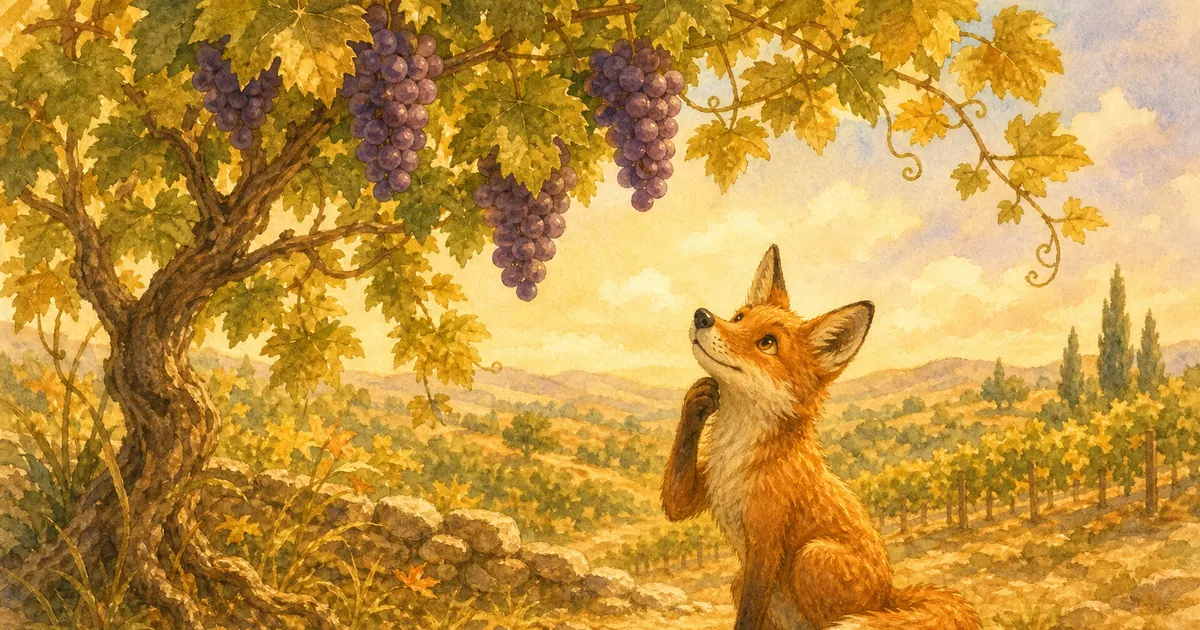
The Fox and the Grapes
狐狸與葡萄
A hungry fox fails to reach ripe grapes and calls them sour rather than admit his disappointment.
Read now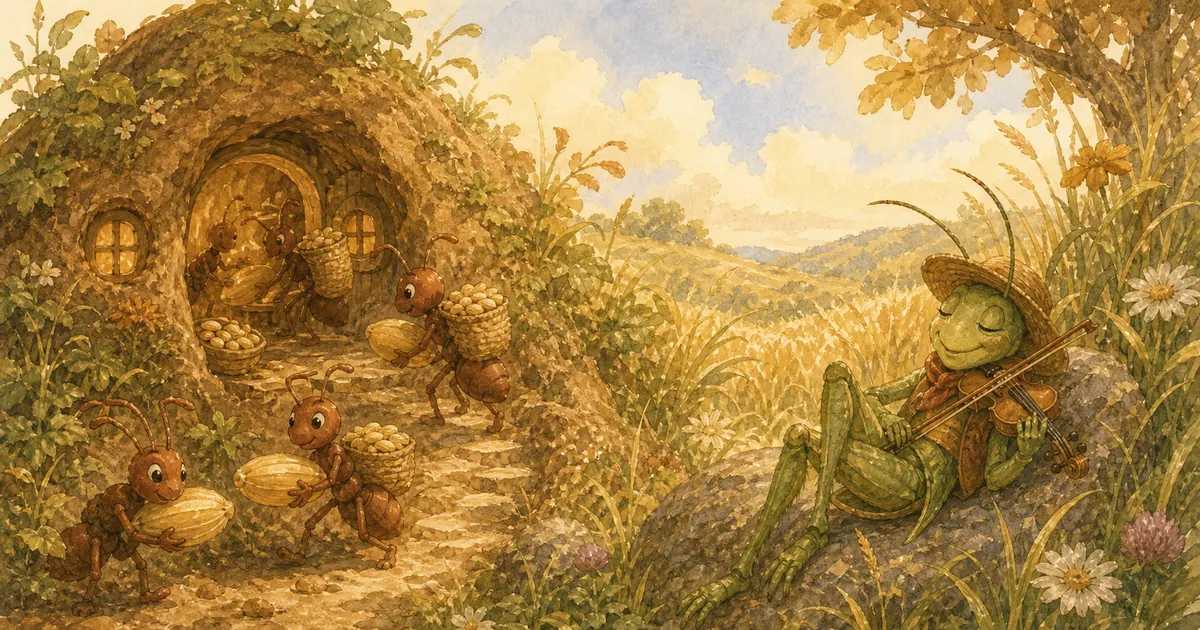
The Ant and the Grasshopper
螞蟻與蚱蜢
A grasshopper sings through summer while an ant stores food, then learns in winter that pleasure needs preparation.
Read now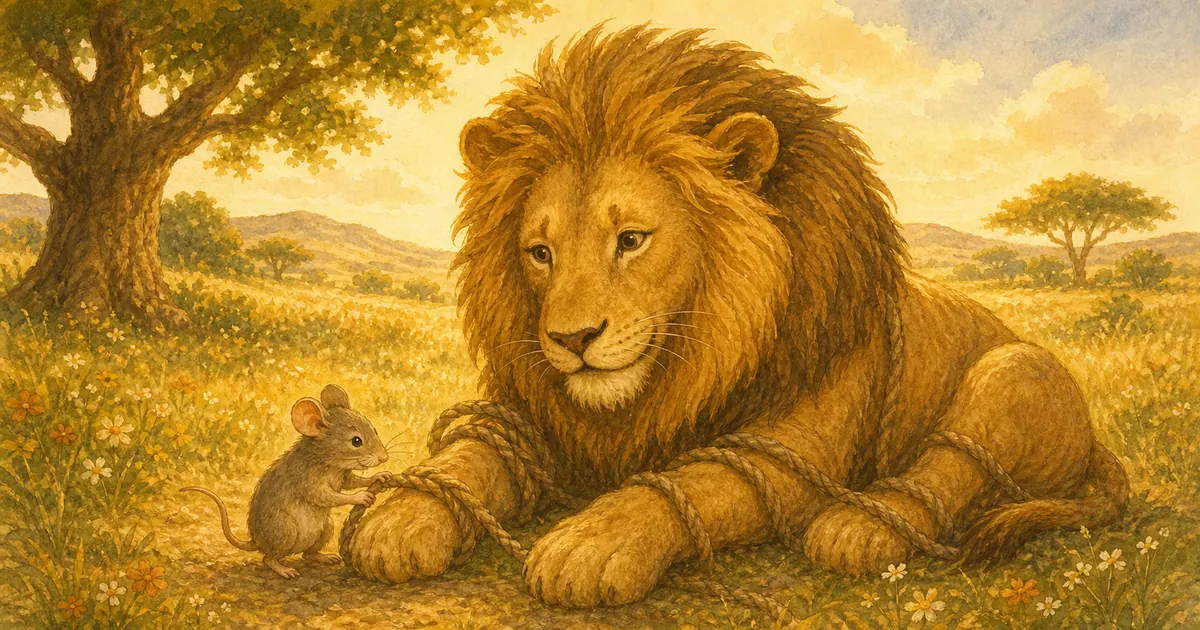
The Lion and the Mouse
獅子與老鼠
A mighty lion spares a little mouse and later learns that even the smallest friend may give great help.
Read now